Can Calligraphy Help With Mindfulness?
Can calligraphy help with anxiety and mindfulness? A registered nurse turned full-time calligrapher (trusted by Dior, Saks Fifth Avenue, and Venchi) shares her own experience, the research behind it, and how to start in 15 minutes a day.
MINDFUL CALLIGRAPHY
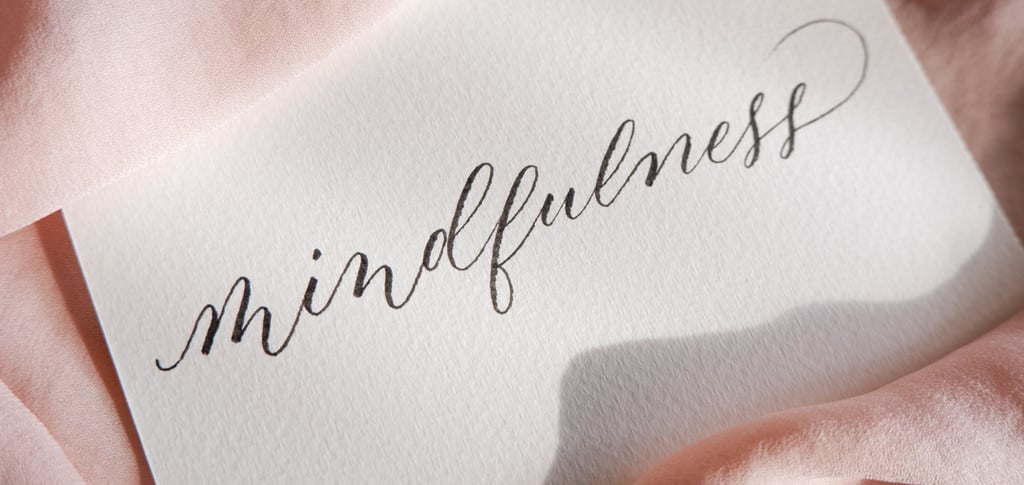
I didn't come to calligraphy looking for mindfulness. I came for the pretty letters.
I wanted something beautiful to make, something playful, something that let me experiment with color. Mindfulness was never the goal. It was the surprise.
Six years into a nursing career, deep in burnout, I attended a calligraphy workshop, hoping to write pretty words. I wasn't trying to heal anything. I just wanted to create. After clumsy strokes and hundreds of practice sheets later, calligraphy taught me something I didn't know I needed: how to slow down.
If you've ever wondered whether calligraphy is actually a mindfulness practice, or just a pretty hobby people call "meditative" without really meaning it, I want to answer that honestly, from the inside, as someone who now does this for a living.
Calligraphy "forced" me to slow down
In my early days, calligraphy did not feel relaxing. My grip was tight. My shoulders were stiff. My mindset was rigid: I have to get this right, otherwise what good is it?
The strokes showed it. Every wobble, every inconsistency, every place where the ink bled because I pressed too hard — it was all right there on the page, a direct readout of how tense I was.
Eventually, calligraphy taught me to aim for progress, not perfection. No one learns calligraphy on day one. Even the artists I now admire started as beginners. And calligraphy is never meant to be rushed. It asks for intention: noticing how relaxed your arm is, how much pressure you're applying, when to transition from a light upstroke to a heavy downstroke, and how, counterintuitively, letting go of control is what makes a stroke smoother.
I remember the specific session when this clicked. I was practicing consistently, stroke after stroke, and it just hit me: I could feel the connection between my mind and my body in real time. Everything felt effortless. I later learned this had a name: flow state. In that moment, it just felt like finally relaxing.
That's the part that makes calligraphy different from a lot of other mindfulness practices. It gives you instant visual feedback. You don't have to guess whether you were present or distracted. Your strokes tell you. A relaxed hand produces a graceful line. A stressed one doesn't. In a way, the art form gently forces you to relax in order to create something beautiful.
Why calligraphy works differently than meditation or yoga alone
I still journal, meditate, and practice yoga for stress relief, and I believe in all three. But calligraphy does something none of them do on their own: it gives you a visual result of what slowing down actually produces.
Meditation asks you to slow down. Yoga asks you to sync movement with breath. Journaling asks you to put your thoughts on paper. Calligraphy asks for all three at once. You inhale on the upstroke and exhale on the downstroke. You notice the grip of your hand. You let whatever words want to come out find their way onto the page, one slow stroke at a time.
It's not a replacement for those other practices. It's a synthesis of them, with a tangible piece of art at the end that proves you were present.
Even under pressure, mindfulness doesn't disappear — it becomes essential
I get asked how any of this applies during a live event, engraving a bottle at a party while guests are talking around me, music playing, everyone moving fast. Isn't that the opposite of mindful?
Actually, it's where mindfulness matters most. At a live event, being efficient means delivering quickly, but that doesn't mean there's no presence involved. When an artist gets distracted mid-stroke, the cost is high. Imagine an engraved perfume bottle with a misspelled name. There's no undo button on glass. A live event demands the deepest level of focus I bring to any part of this work, even amid the noise of a party.
That's the version of mindfulness I don't see talked about enough: not the quiet, candlelit kind, but the kind that holds steady under real-world pressure.
What the research says (because I love the data as much as the art)
I have a background in nursing, and if I'd stayed on that path, research was actually where I saw myself heading. So when I started conceptualizing a workshop, I didn't want to build "just another class that teaches basic strokes." I wanted to ground it in evidence that calligraphy can genuinely support mental health, the way it did for me.
A few studies back this up:
A 2024 study of 246 older adults found that regular calligraphy practice was linked to greater peace of mind and better stress self-management, both of which predicted a more positive sense of their own health.
A separate experimental study compared Chinese calligraphic handwriting directly against meditation as stress-reduction interventions over eight weeks, tracking physiological markers like heart rate, respiratory rate, and muscle tension. Both practices reduced stress, and calligraphy in particular stood out as a promising approach.
Harvard's Asia Center has even run a multi-session workshop series called Mindfulness Through the Brush, framing calligraphy as a way to reconnect with a tactile, quiet way of being in a screen-saturated world. Their language echoes something I've felt for years: the line you draw is a reflection of the mind guiding it.
None of this surprised me. It confirmed what my own experience taught me.
What "learning calligraphy" actually means
Here's the mindset shift I want to share to every student before they pick up a pen: calligraphy is not handwriting. It's drawing shapes to form letters and words.
That distinction matters. Handwriting is fast and automatic, something you do without thinking. Calligraphy asks you to slow that automatic process down and rebuild it, stroke by stroke, on purpose. On the surface, my students learn to form their name in a new script. Underneath that, they're practicing something bigger: choosing slowness over rushing, progress over perfection, and letting go of control instead of gripping it tighter. That's the real transformation. Calligraphy is just the medium.
Curious what 15 mindful minutes a day could look like? I put together a free Mindful Calligraphy Starter Series — eight days, one new stroke each day, paired with short reflections on progress vs. perfection and the art of slowing down. Sign up for my email list below to get the worksheets delivered straight to your inbox.
© 2026. All artwork copyright by Handwritten by Belle.
Handwritten by Belle is an NYC calligrapher & live event artist serving New York, New Jersey & nationwide events. Services include calligraphy, engraving, hot foiling, bottle painting, and watercolor illustration. Please inquire to book for live events such as brand activations, product launches, corporate events, conferences, PR & influencer gifting, weddings, and so much more.