What Should I Expect From a Hand Engraver?
Booking a hand engraver for your NYC event? Here's exactly what to expect — from material testing to live engraving — from Handwritten by Belle, trusted by Dior, Saks, Trish McEvoy, and Attentive.
LIVE EVENT ARTISTRY
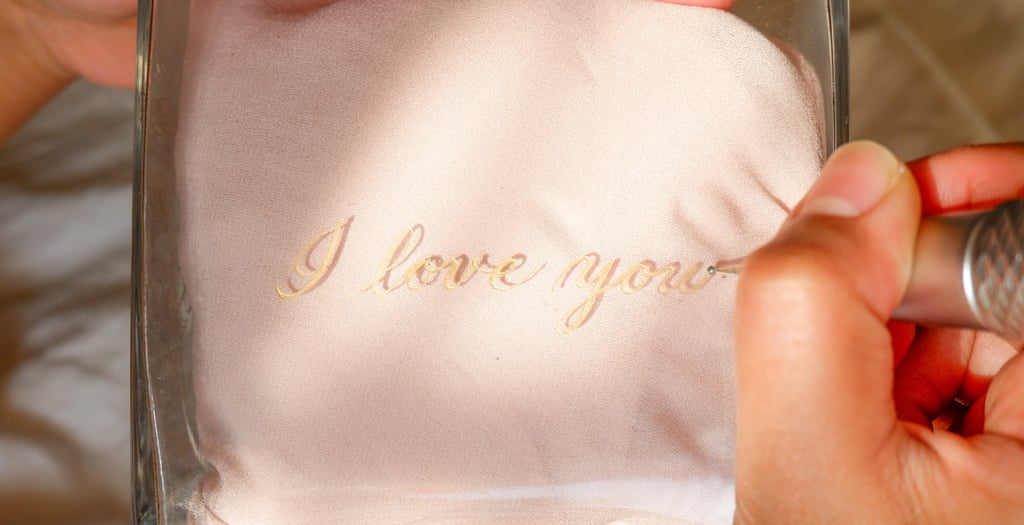
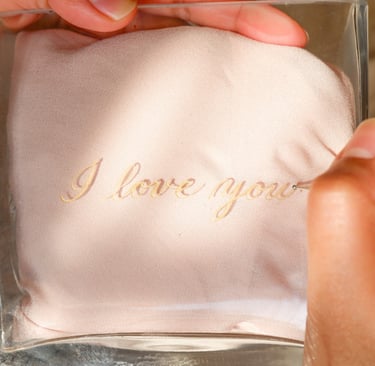
The client's request seemed simple enough: an eyeshadow brush, engraved with initials, on the spot, at a luxury beauty activation. Except it wasn't part of the original booking — it was a surprise add-on, decided in the moment, on a surface I hadn't prepped for.
The brush was metal - tiny, slippery. And I hadn't brought the burr size built for something that small.
What followed was five minutes of the slowest, lightest, most deliberate engraving of my career — and a finished piece the client loved. But it also taught me something I now build into every single booking: the surface is never "just a detail." It's the whole job.
If you're an event planner or brand considering hand engraving for an upcoming activation, product launch, or private celebration, here's exactly what you should expect — and what separates a polished, camera-ready experience from a risky one.
The Process Starts Long Before the Event
A professional hand engraver isn't showing up with a tool and winging it. The real work happens in the weeks before your guests ever see the setup.
At Handwritten by Belle, every booking begins with the details of the item itself: material, surface texture, and photos. But photos only go so far — a picture can't tell you how glass will grip a burr, or whether a coating will chip under pressure. That's why items are tested in advance whenever possible, so the engraving is proven, not guessed at, before it ever touches a guest's product.
This matters because not every surface behaves the same way:
Glass (such as perfume bottles, stemless wine glasses, candle holders) — engraves beautifully, especially on flat, clear surfaces.
Metal (water bottles, utensils, makeup brushes, matchboxes, keepsake boxes) — varies widely depending on coating and thickness.
Wood (combs, brush handles, keepsake boxes) — takes engraving well but shows grain differently than glass or metal.
Plastics (common in beauty packaging) — require testing, since not all plastics engrave cleanly.
Testing also answers a question most clients don't think to ask: should the engraving be filled with color wax, or left as a clean, uncolored "blind" engraving? Frosted glass and certain coated metals don't hold wax well, so the right call depends entirely on the material — not on what looks trendiest.
What Happens On-Site
A hand engraver's setup should feel effortless to your guests, even though it's the result of careful planning behind the scenes.
Expect an engraver to arrive early, typically 30 minutes ahead, to set up, even if the actual footprint is minimal. Expect questions about your venue and flow well before that: Is the event indoors or outdoors? Is there enough lighting, or should a portable light source be brought? Will guests wait for their item, or will favors be collected and picked up later?
The answer changes the entire game plan. A retail moment where guests wait one-on-one runs differently than a high-volume corporate activation or product launch, where an order-form system keeps the line moving without sacrificing quality.
Even the aesthetic of the setup is considered — tools and styling coordinated to match your event's tone, whether that's editorial luxe or relaxed and tropical, so the engraving station photographs as well as the product does.
What Most Brands Get Wrong About Booking
Booking too late. Hand engravers should be booked at least one month out — and ideally two to three months out for peak seasons like May and December, when calendars fill quickly.
Assuming pricing is just for the personalization itself. The rate reflects far more: the research and testing done beforehand, the precision required to engrave live in front of guests, the backup tools brought in case something goes wrong, and the years of practice that make it look effortless.
Sending a photo instead of the item. While a photo can usually suffice when it's a familiar surface, it can't always show texture, coating, or how a surface will respond to a tool, especially if the item is unique. Sending the actual item for testing isn't extra caution — it's what makes a flawless live engraving possible, and it doubles as a sample guests can see before their own item is personalized.
Assuming every surface calls for engraving. It doesn't. Plastic surfaces don't always engrave cleanly. Paper goods are typically better suited to calligraphy, and smooth leather is often a better match for hot foil. Part of what a good engraver brings to the table is telling you when engraving isn't the right call.
The Philosophy Behind the Work
For live events, time is gold, and material is silver. The priority is always serving as many guests as possible — but that's only achievable when the personalization method actually fits the material. The real risk isn't running out of time. It's not knowing how an item will respond to the tool until it's already in front of a guest.
That's why testing happens before, and not during, the event. Your event is the moment that matters — not the place to find out whether a surface cooperates.
Twelve years in nursing shaped this mindset more than any engraving course ever could. Nursing taught me that preparation isn't about expecting failure — it's about creating the best possible outcome before the moment even begins. That lesson stayed with me. While the consequences are different today, the responsibility feels familiar. In nursing, a missed detail could affect a patient's well-being. In live event engraving, a single mistake could permanently damage an item that holds both financial and sentimental value. Different fields, but the same commitment: prepare thoroughly, pay attention to the smallest details, and make the person in front of you feel completely taken care of.
What You Should Expect from a Hand Engraver
When you're booking a hand engraver, you're not just hiring someone who can personalize products beautifully. You're trusting someone to work on items that often can't be replaced, while creating a seamless experience for your guests.
A professional hand engraver should:
Test the actual item before the event whenever possible—not rely on photos alone.
Recommend the right finish based on the material, whether that's blind engraving or wax fill, instead of simply following trends.
Plan for your guest count and event flow so personalization stays smooth from start to finish.
Arrive prepared with the tools, backup equipment, and setup needed to work confidently on-site.
Be honest if another personalization method—like hot foiling or calligraphy—is better suited for your products.
For me, hand engraving has never been just about putting names on products. It's about protecting the items entrusted to me, creating a memorable experience for every guest, and helping brands deliver an activation that feels effortless from beginning to end.
That's the approach I bring to every event, whether it's for a boutique gathering or a large-scale brand activation.
If you're planning an event in NYC or beyond and are considering live hand engraving, I'd love to help. Reach out to check availability, and we'll start by making sure your products are the right fit —long before your guests arrive.
© 2026. All artwork copyright by Handwritten by Belle.
Handwritten by Belle is an NYC calligrapher & live event artist serving New York, New Jersey & nationwide events. Services include calligraphy, engraving, hot foiling, bottle painting, and watercolor illustration. Please inquire to book for live events such as brand activations, product launches, corporate events, conferences, PR & influencer gifting, weddings, and so much more.